



Hey there! Kathy here.
Most newsletters feel difficult to write because people try to reinvent them every single week. You sit down, open a blank email, and feel like you have to come up with something completely new every time. That pressure makes consistency feel harder than it should be.
But when your emails follow a simple weekly newsletter format, everything becomes easier. Instead of starting from scratch, you are working from a layout that already exists. You know what sections to include, how your message will flow, and what your reader can expect.
In this blog post, I am going to walk you through a simple weekly newsletter format you can reuse every week. One that saves time, reduces decision fatigue, and helps you show up consistently without overthinking every email you send.
“Consistency with newsletters becomes easier when your emails follow a structure you can repeat.”
– Kathy Schneider
A big part of the struggle comes down to deciding how your newsletter is structured. When that decision has to be made every single week, it slows you down and makes the process feel heavier than it needs to be. Instead of focusing on your message, you are trying to figure out how to organize it.
This Week’s Affirmation:
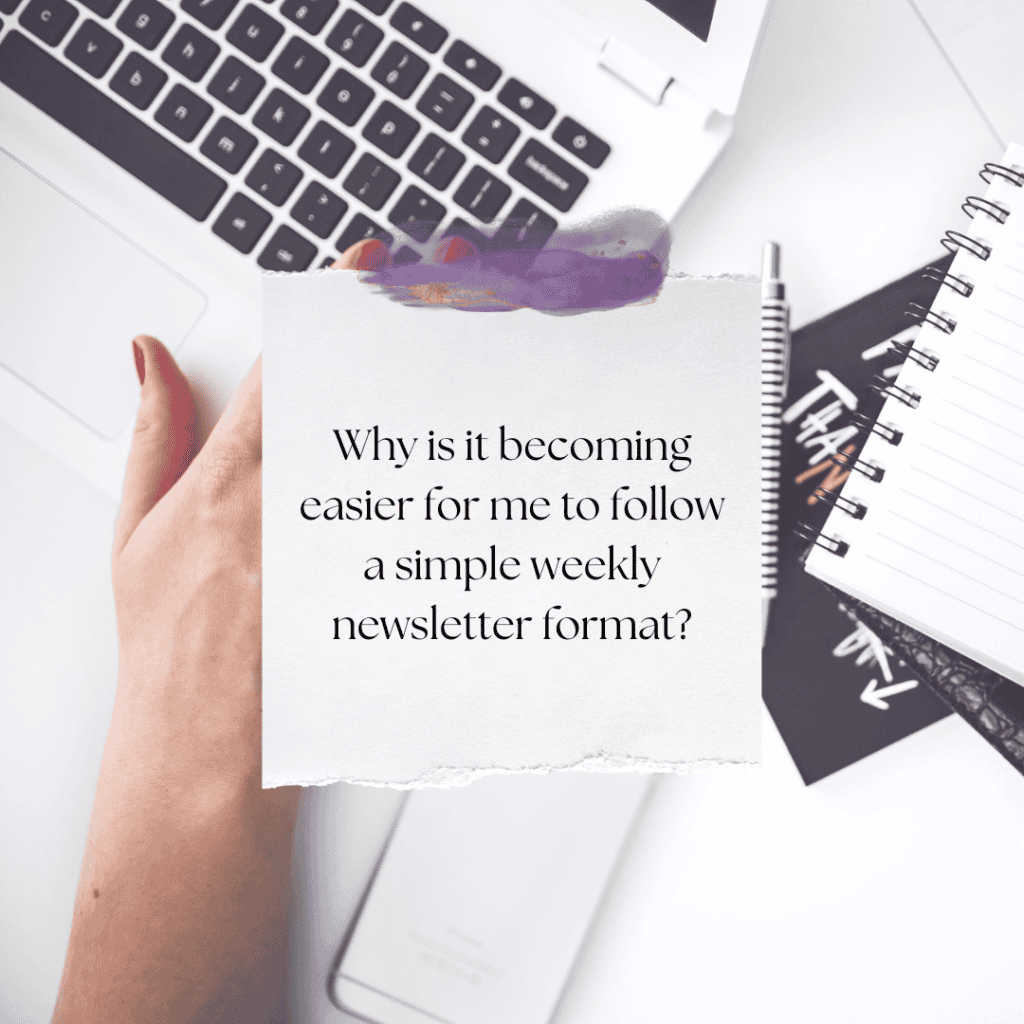
When every email follows the same layout, that decision disappears. Writing becomes faster, your message flows more naturally, and sending your newsletters becomes far more consistent. You are no longer starting from scratch. You are simply filling in a structure that already supports you.
Why Your Newsletter Needs a Repeatable Format
One reason newsletters can be difficult to write is that many solopreneurs try to create a new format every time they send an email. But newsletters become much easier to maintain when they follow a simple, repeatable structure. In this episode, I’m sharing how a simple weekly newsletter layout can make writing and sending your emails faster and more consistent.
*A simple weekly newsletter format removes one of the biggest challenges in email marketing — figuring out how to structure each message.
When every newsletter follows the same layout, you no longer start from scratch each week. Instead, you simply fill in the sections that already exist.

How to Create a Simple Weekly Newsletter Format You Can Reuse
A newsletter becomes much easier to write when it follows a predictable structure. When someone opens your email, they should quickly understand what they will find. Just like a blog or magazine has familiar sections, your newsletter can follow a simple layout that guides both you and your reader. You know what to write, and your subscribers begin to recognize and expect the format. The goal is not to create the perfect layout. It is to create one you can repeat consistently.
Step 1: Start With a Simple Introduction
Begin each newsletter with a short introduction that sets the tone for the week. This can be a quick thought, a personal insight, or a transition into the topic you are covering. It helps your reader feel grounded and ready for what is coming next.
Step 2: Share One Key Insight or Teaching
This is the core of your email. It could be a lesson, a tip, or a simple idea connected to your current series or content focus. Keeping it to one main point makes your message clear and easy to follow.
Step 3: Include a Resource or Helpful Link
Add something your reader can take action on. This might be a freebie, a blog post, a tool, or a resource that supports what you just shared. This section adds value and gives your reader a next step.
Step 4: Add a Personal or Business Update
This can be a quick behind-the-scenes moment, a current focus in your business, or something you are working on. It builds connection and helps your audience get to know you beyond just the teaching.
Step 5: Invite Engagement With a Simple Question
End your content with a question your reader can reflect on or reply to. This keeps your emails from feeling one-sided and encourages connection.
Step 6: Close With a Clear Call to Action
Let your reader know what to do next. Whether it is downloading a resource, reading a blog post, or simply reflecting on your message, a clear next step keeps your email purposeful.
Not every newsletter needs every section, and your format does not need to look like anyone else’s. Some creators use a “three ideas, two resources, one tip” format, while others focus on quick wins, updates, or tools they love. The goal is not to copy a format. It is to create one that feels natural for you to follow week after week.
When you choose a simple structure and stick with it, writing becomes easier, your emails feel more consistent, and your newsletter turns into a rhythm you can maintain.
Weekly Action Step
Now that you can see how a simple, repeatable layout makes your newsletters easier to write and send, it’s time to put this into practice. You do not need to build the perfect format right away. Progress comes from choosing a basic structure you can follow consistently.
An Action Item for your business:

I want to encourage you to consider the Weekly Action Step seriously. It is there to provide a lesson in this post and make it actionable. I’m here to support you on your journey toward peak productivity, helping you work smarter, not harder. With each weekly action step, you’ll build a new habit, refine your workflow, and unlock the full potential of your productivity.
Plan Your First Newsletter Series With a Simple System
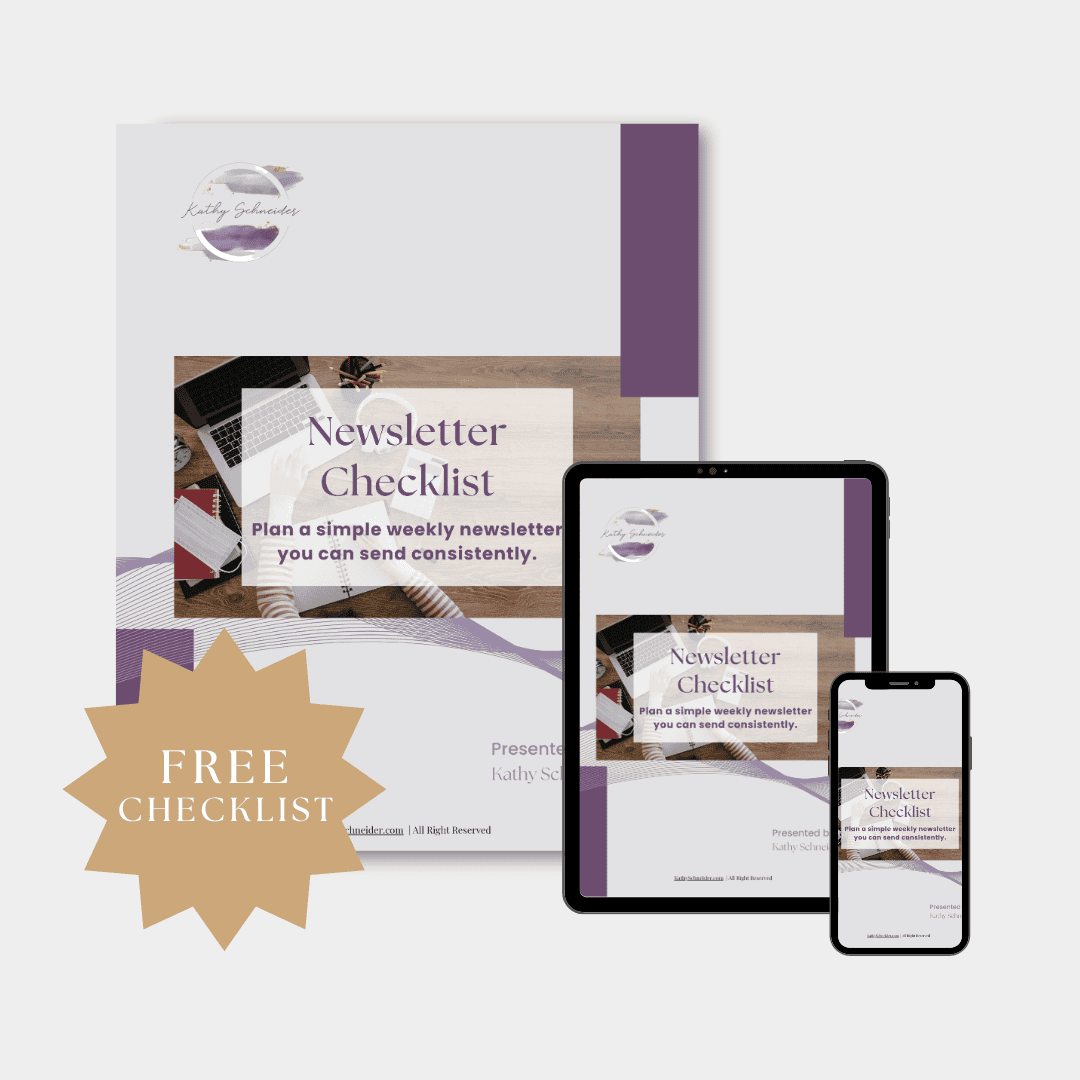
If you would like help planning your first newsletter series, download the Weekly Newsletter System Checklist.
It is a simple one-page guide to help you choose a topic, outline five emails, and start creating a repeatable newsletter rhythm.
Closing Thoughts: Keep It Simple and Repeatable
A simple weekly newsletter format is what turns your emails from something you have to think about into something you can simply follow. When your structure is clear, writing becomes easier, consistency becomes natural, and you spend less time figuring things out each week. You are no longer starting from scratch. You are building on a format that already supports you.
The goal is not to create the perfect email every time. It is to create a format you can return to again and again. When your newsletter has a rhythm, your confidence grows, your message becomes clearer, and showing up in your inbox feels like a natural part of your business instead of another task on your list.
Helpful Resources:
- Why Most Solopreneurs Stop Sending Newsletters – KathySchneider.com/166
- How to Plan a 5-Week Newsletter Series – KathySchneider.com/167