


Hey there! Kathy here.
Why women (and men) entrepreneurs feel behind at home has very little to do with discipline or time management, and everything to do with the invisible mental load you’re carrying. You are not bad at managing your home. You are juggling responsibilities, decisions, and expectations that no one ever taught you how to systemize or share.
When you’re building a business and running a household at the same time, it can feel like you are constantly behind, no matter how hard you try. The to-do list never ends, your mind never fully shuts off, and even on “good” days, there is a quiet sense that something is slipping through the cracks. In this blog post, we will discuss what is really happening beneath the surface and why this struggle is not a personal failure, but a systemic problem that can be solved.
“Feeling behind at home isn’t a personal failure – it’s what happens when invisible mental work has no system to support it.”
– Kathy Schneider
Once you understand why you feel constantly behind, everything shifts from shame to clarity. Instead of asking, “Why can’t I keep up?” you start asking better questions like, “What am I carrying that doesn’t actually belong on my plate?” That awareness alone can feel like a deep exhale, because it reframes the problem from a personal flaw to an unsustainable structure.
This Week’s Affirmation:
Most women entrepreneurs are managing far more than visible tasks. You’re holding plans, schedules, reminders, decisions, and emotional responsibility in your head all day long. When that mental load has no system to support it, it creates constant pressure and fatigue.
Why Feeling Behind at Home Isn’t a Personal Failure
In this episode, you’ll discover why women entrepreneurs feel constantly behind at home, even when they’re productive, organized, and successful in business.
I share the invisible mental load that so many women carry, why traditional home organization advice doesn’t work for entrepreneurs, and how running your home reactively creates exhaustion and burnout.
*In this video, you’ll learn how shifting from daily task management to rhythmic, seasonal planning can immediately reduce overwhelm and help your brain finally let go of everything it’s holding.

What’s Really Causing the Constant “Behind” Feeling
If you’re building a business and running a household, it can feel like no matter how productive you are, there’s always something left undone. Laundry piles up, meals need planning, school emails keep coming, and appointments live in your head instead of a system. The hardest part is that this work is mostly invisible, yet it drains your energy every day. What’s actually happening isn’t a lack of effort or discipline. You’re operating two full systems at once, a business and a home, but only one of them is being treated like it deserves structure and strategy.
Here’s what’s really at play and how to start shifting it.
1. You’re Managing Two Systems, Not One
Your business has plans, goals, workflows, and tools. Your home, on the other hand, is often managed on the fly. When one system is strategic, and the other is reactive, your brain is forced into constant context switching, which leads to exhaustion.
2. Traditional Organization Advice Doesn’t Fit Your Life
Most home organization advice assumes predictable days, extra mental space, and someone else handling logistics. That’s not your reality as an entrepreneur. Trying to force those methods only adds frustration, not relief.
3. Reactive Home Management Creates Mental Overload
You’re not behind because you’re disorganized. You feel behind because your home is being run reactively instead of rhythmically. When everything is handled as it pops up, your brain never gets a break.
4. Burnout Comes From Switching Roles, Not Lack of Productivity
Many women entrepreneurs don’t burn out from work itself. They burn out from constantly jumping between CEO mode and household manager mode without clear boundaries or systems to support both roles.
5. Planning in Seasons, Not Days, Brings Relief
One of the simplest ways to ease the pressure is to zoom out and view your life in seasons instead of daily to-do lists. Planning this way allows you to align business and home rhythms so they support each other instead of competing for your attention.
When you stop trying to hold everything in your head and start giving your home the same level of structure as your business, your nervous system can finally breathe. That’s when the constant feeling of being behind begins to loosen its grip.
Weekly Action Step
Now that you understand why the mental load feels so heavy at home, it’s time to shift from reacting to designing a rhythm that supports you. Real change doesn’t come from fixing everything at once. It comes from choosing one intentional shift and letting it create momentum.
An Action Item for your business:
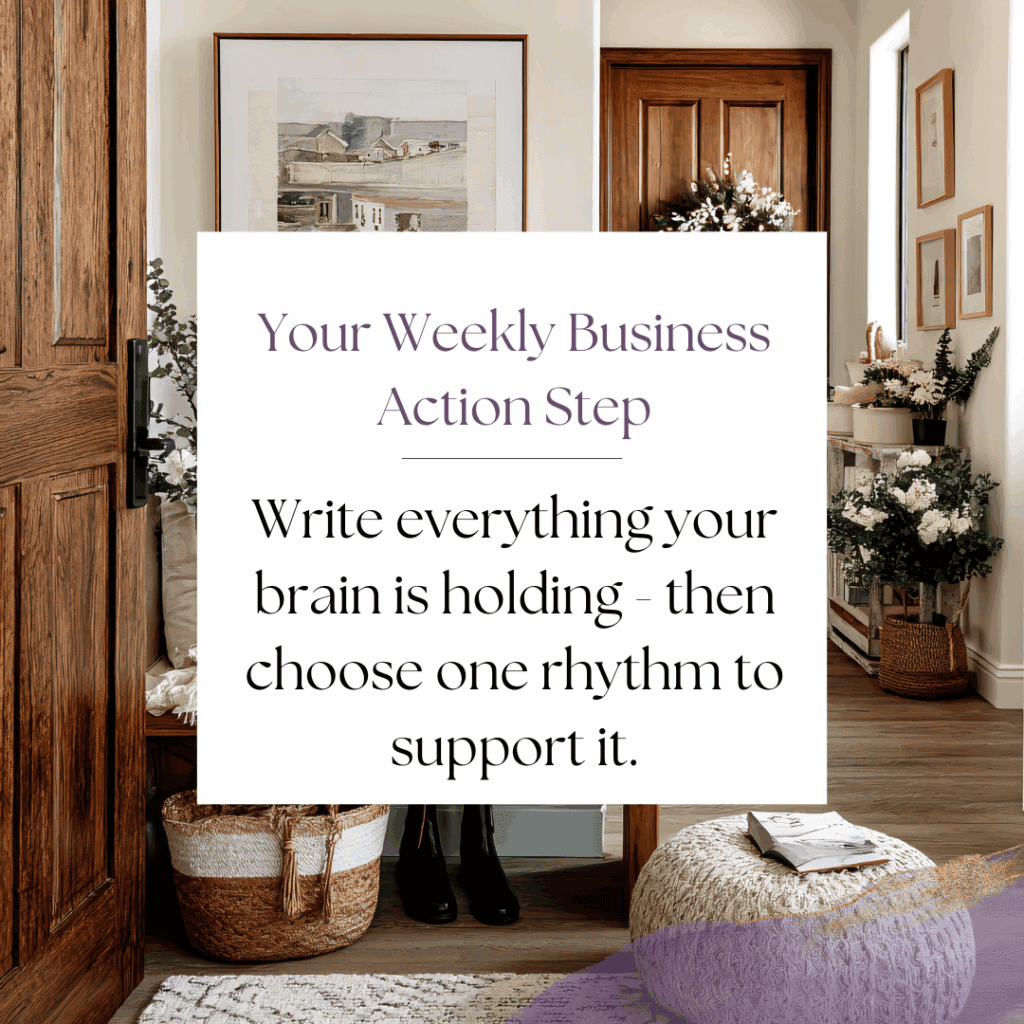
I'd like to encourage you to consider the Weekly Action Step seriously. It is there to provide a lesson in this post and make it actionable. I'm here to support you on your journey toward peak productivity, helping you work smarter, not harder. With each weekly action step, you'll build a new habit, refine your workflow, and unlock the full potential of your productivity.
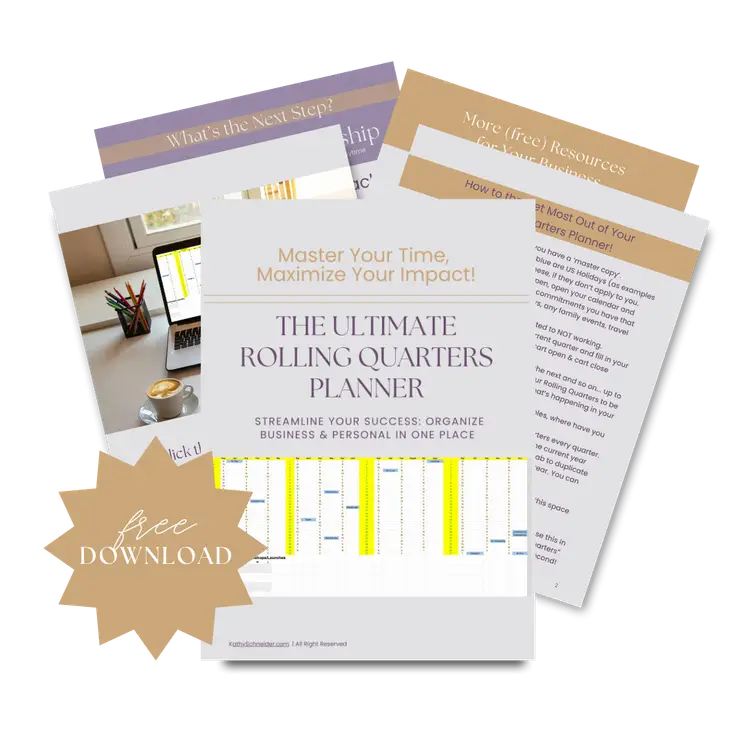
Are You Ready to Master Your Time and Maximize Your Impact
The Ultimate Rolling Quarters Planner is here to streamline your success: Business & Personal Organized in One Place.
It's more than just a tool; it's your personal organizational assistant. Let it streamline your planning, so you can focus on growing your
business and enriching your personal life.
Don’t let chaotic scheduling and mismanaged tasks slow you down.
Closing Thoughts: You Don’t Need to Try Harder, You Need a Better Rhythm
Understanding why women entrepreneurs feel behind at home is what separates constant self-criticism from real, lasting change. Awareness creates clarity, and clarity makes it possible to stop reacting to everything at once. When you recognize that the issue is not effort or capability but an unmanaged mental load, you can finally begin to design rhythms that support both your business and your home.
Relief does not come from doing more, trying harder, or becoming more disciplined. It comes from building systems that remove decisions from your head and place them into structure. When your home is supported by planning instead of constant reaction, your energy returns, your focus sharpens, and that lingering sense of being behind starts to dissolve, one thoughtful adjustment at a time.